California Cardroom Rake Cap Mechanics: The Real Math Behind the Drop
The California cardroom rake cap is not a courtesy—it is a hard-coded ceiling that dictates whether a game is beatable or a slow bleed. Most players glance at the posted limit and assume it is uniform across the floor. Wrong. The rake structure in California's licensed cardrooms operates under a completely different regulatory skeleton than the tribal gaming framework, and that distinction is where the real money leaks.
Under the state's gambling statutes, non-tribal cardrooms function as "players" in the games they spread—they cannot bank the game directly. The workaround is the third-party proposition player model, and the rake cap is the mechanism that keeps the house profitable without technically violating the banking prohibition. Every dollar pulled off the table is engineered to the cent. 🔍
The Tribal Distinction: Why Sovereign Compacts Rewrite the Rules
Tribal casinos in the United States operate under the Indian Gaming Regulatory Act and individual state compacts. Those compacts are negotiated sovereign-to-sovereign, meaning the rake structure—or the house edge on table games—answers to federal and tribal law, not the state cardroom statutes. This is the Tribal Distinction in USA that every serious operator must internalize. A tribal property can set a drop that would be illegal in a commercial cardroom two miles away. The compact is the law.
The practical fallout is brutal: a player grinding in a California cardroom faces a rake cap that is codified and auditable, while a player at a tribal property faces a structure that can shift with compact renegotiation. No uniform federal rake ceiling exists. Anyone claiming otherwise has never read a compact. 💀
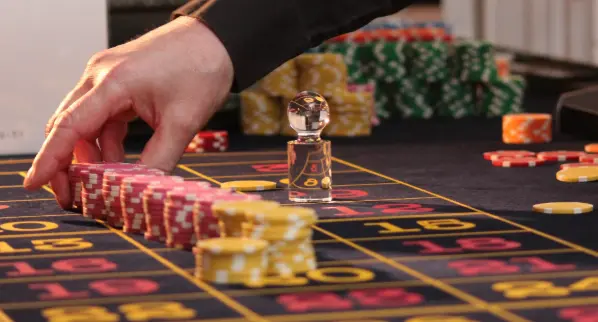
Deconstructing the California Cardroom Rake Cap
Here is the operational reality. California cardrooms typically cap the rake per hand, often tied to the limit of the game and the number of players dealt in. The cap is not a suggestion—it is enforced by the cardroom's internal audit and the state's gaming control apparatus. When the California Cardroom Rake Cap is set at a fixed dollar amount per flop, the effective hourly cost to a player scales with hands per hour, not pot size. High-frequency small pots get taxed disproportionately. That is the hidden edge.
Run the math on a live $1/$3 table: if the cap is $5 per hand and the dealer pushes 30 hands an hour, that is $150 leaving the table per hour regardless of who wins. Divide by nine seats and you are bleeding roughly $16.67 an hour before you play a single pot. The cap is the bleed rate. ⚙️
Third-Party Proposition Players and the Rake Illusion
Because California cardrooms cannot bank games, proposition players and third-party entities absorb the risk. The rake cap is calibrated so the cardroom and the prop player both extract value without crossing the legal line. The prop player's compensation is frequently tied to the drop, which means the rake cap directly determines their margin. When a cardroom pushes the cap to its legislative maximum, the prop operation gets squeezed and the game's texture tightens—fewer loose calls, more fold equity extraction. The cap is not just a tax; it is a game-theory lever.

Audit Trails and the Hardware Layer
Electronic table systems and RFID-enabled drop boxes log every rake collection against the configured cap. If the firmware cap value is misconfigured—say, set to a tribal-style percentage instead of the fixed cardroom ceiling—the audit log will show a variance that triggers a compliance review. I have seen firmware builds where the rake parameter is a single hex value in the table controller config. Change that byte and the entire game economics shift. That is the hardware insider's view: the cap is not a policy document, it is a configurable register on a controller board. 🎯
The Tribal Distinction in USA matters at the firmware layer too—tribal properties often run different controller profiles entirely, and the drop configuration is loaded per-jurisdiction. A single cardroom floor can host both profiles if it operates under a dual-license arrangement, and the controller swaps the rake algorithm based on the game's regulatory tag. The cap lives in the machine.
Where the Cap Becomes a Weapon
Smart operators use the California cardroom rake cap as a competitive moat. A cardroom that keeps its cap low relative to the legislative maximum attracts volume players who track effective hourly cost. A tribal property with a compact-driven drop has no such flexibility—its structure is locked until renegotiation. The player who understands this arbitrages between the two, chasing the lower effective rake and abandoning tables where the cap-to-hand-frequency ratio crosses the profitability threshold. The threshold sits at roughly 4.5 big blinds per hour for a competent $2/$5 regular. Cross it and the game is a rake trap.
The regulatory split between state-capped cardrooms and sovereign tribal compacts is not a footnote—it is the entire economic architecture of the table you sit at. Read the cap, check the controller profile, and calculate the bleed before the first hand is dealt.